Memory is a recurring and structuring theme in my work. My father’s experience with dementia prompted sustained reflection on remembering and forgetting, presence and loss. My works often unfold through layers, repetitions, and superimpositions, echoing the fragmentary, unstable, and fluctuating nature of memory itself. Rather than offering fixed narratives, these works invite viewers into a process of accumulation, erosion, and reconfiguration.




Memory, meaning and loss
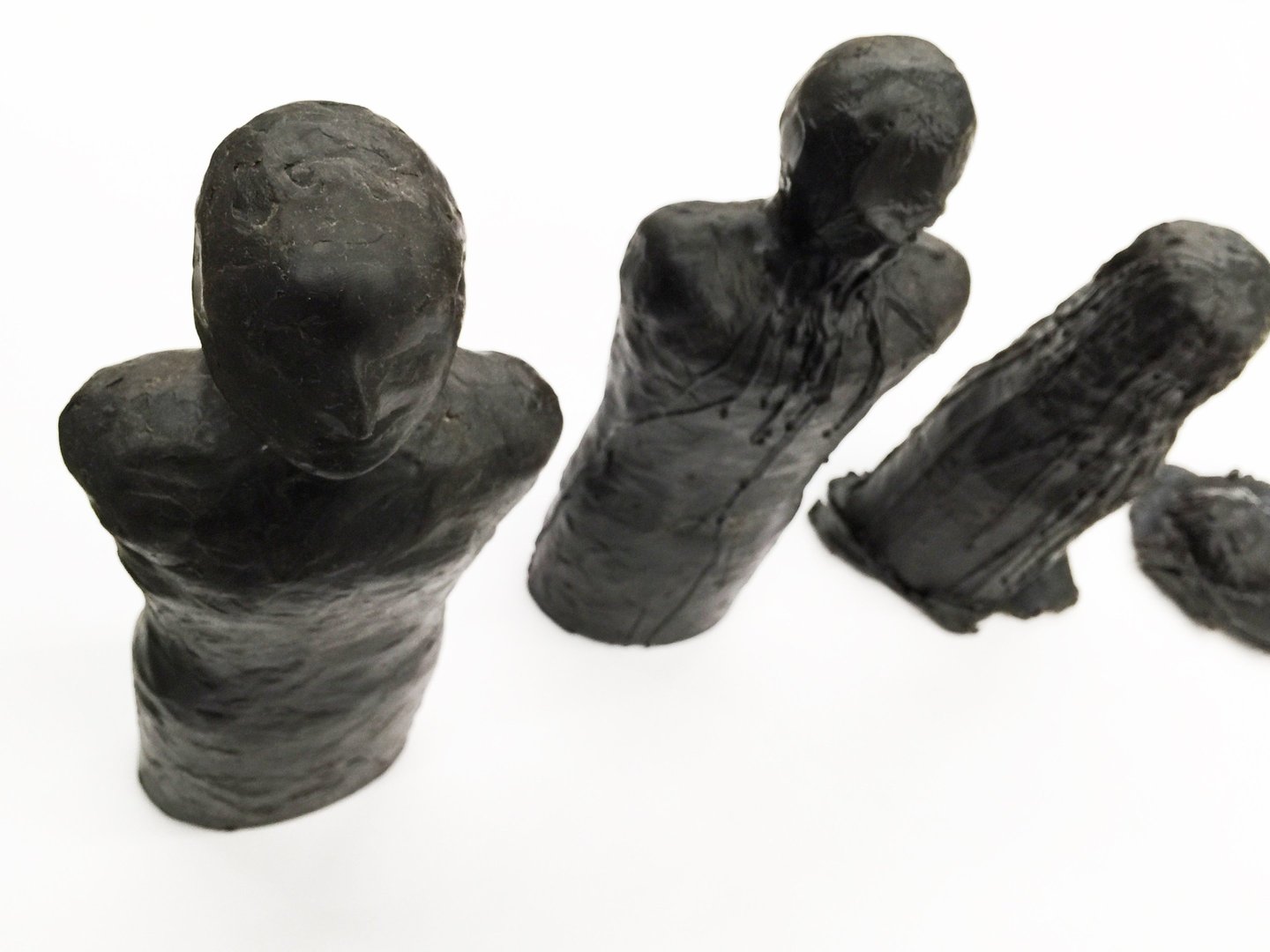
Melting Facsimiles is a series of black wax sculptures that explore transformation and impermanence through the literal process of melting. The initial form is a fully realized human figure with head, neck, shoulders, and elongated torso. Subsequent sculptures record stages of decay: the face gradually melts, then the entire head liquefies with wax drippings extending down the torso, until finally, the figure collapses into a large, abstract puddle.
This progression captures the vulnerability of the human form and reflects on the passage of time, memory, and identity. While the work is figurative, the melting process abstracts the figure over time, emphasizing transformation as an inevitable and observable phenomenon.
Black Wax
2018
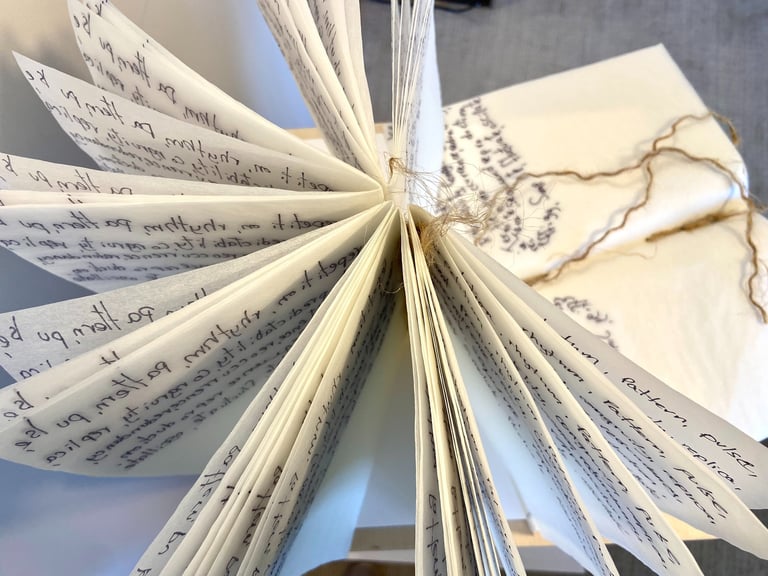
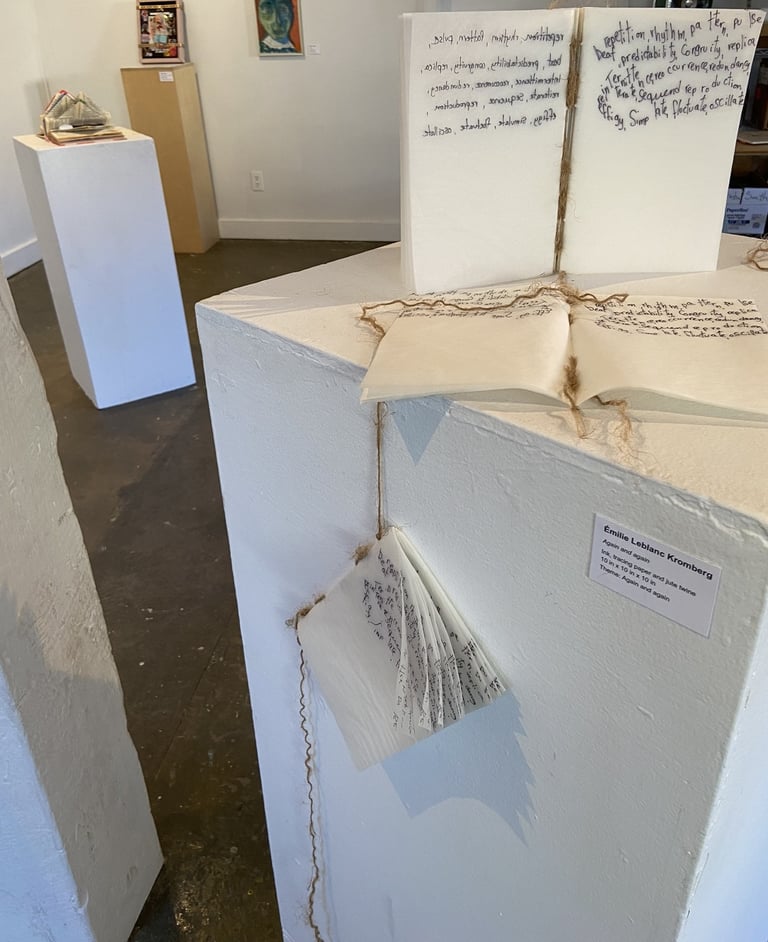
Again and Again continues my investigation into memory, repetition, and disfigurement. Over time, my research expanded beyond the personal. I became interested in the fact that memory is inherently unstable for all humans: when a memory is recalled, it is not retrieved intact, but reconstructed from the last time it was remembered. Neuroscientific research on memory reconsolidation — including work by Professor Karim Nader and his team at McGill University — demonstrates that memories are altered each time they are accessed, reshaped at a molecular level before being stored again.
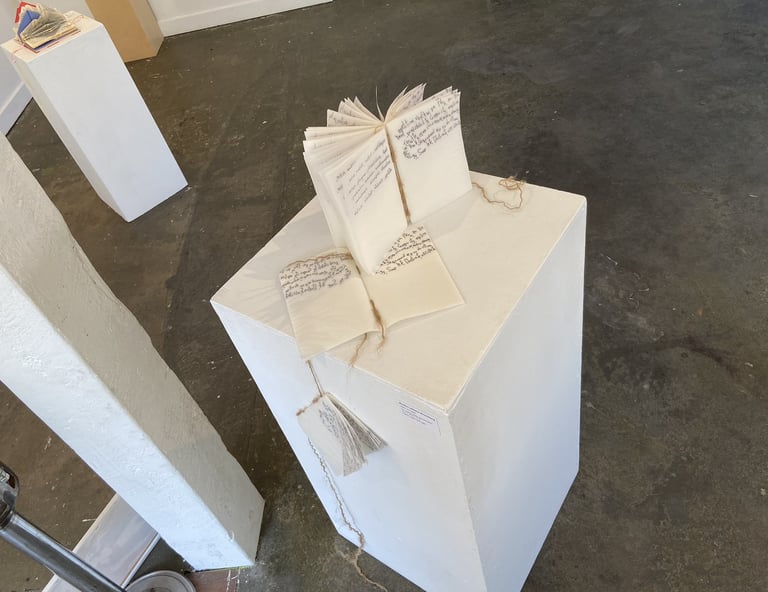
In this work, words written in ink are repeatedly traced from one sheet to another. With each iteration, subtle distortions accumulate until the text becomes nearly illegible. The process mirrors both the neurological mechanics of memory reconsolidation and the emotional experience of memory loss, where meaning persists even as clarity fades. Bound using a rustic, hand-built bookbinding method and presented open as a sculptural form, the work emphasizes duration, vulnerability, and the quiet disappearance of certainty. Language becomes residue — a visible trace of memory in motion rather than a fixed record.
Ink on paper, jute twine
2024
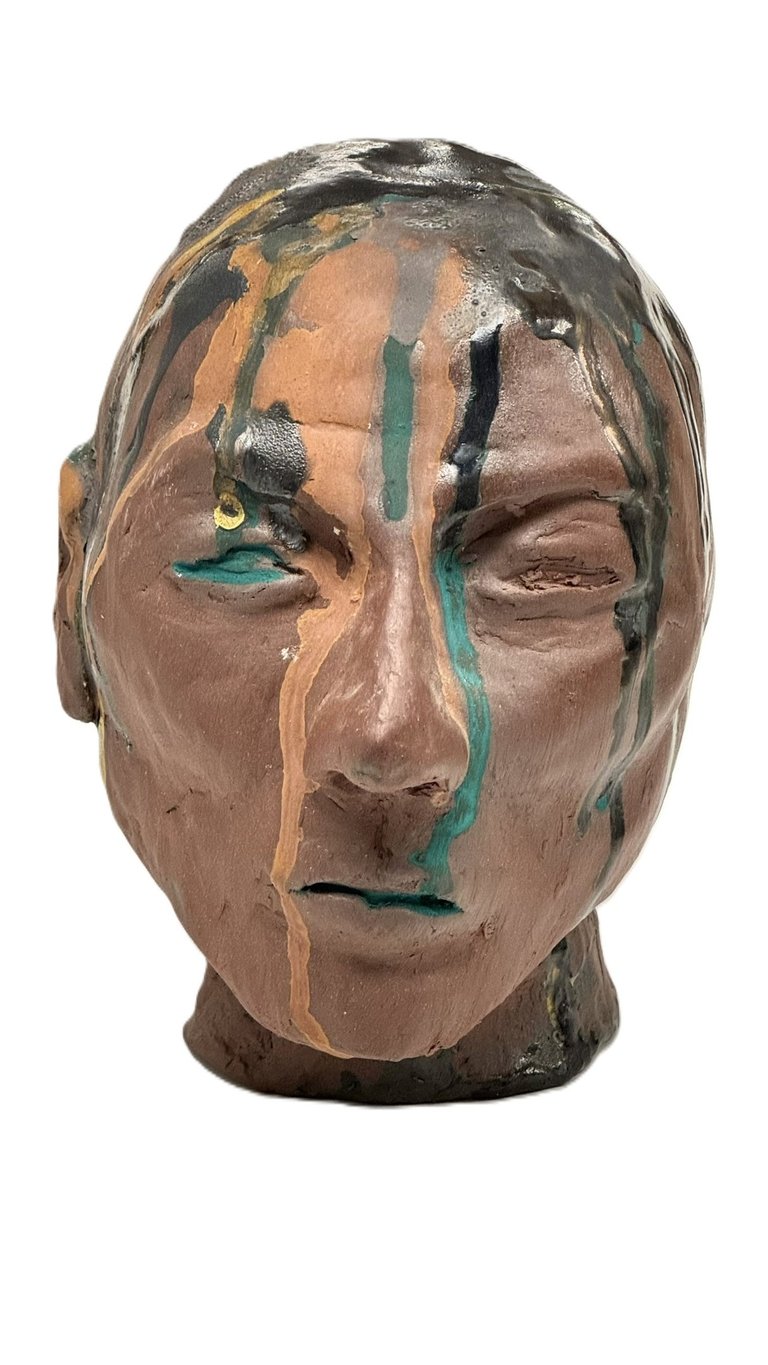
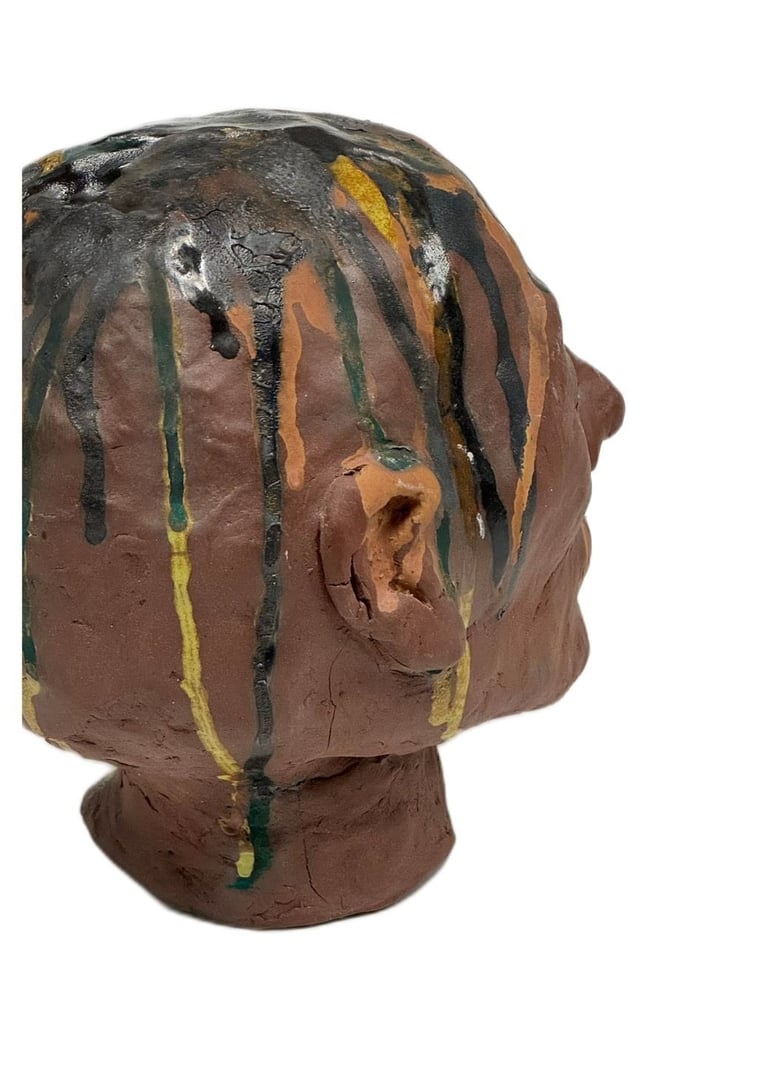
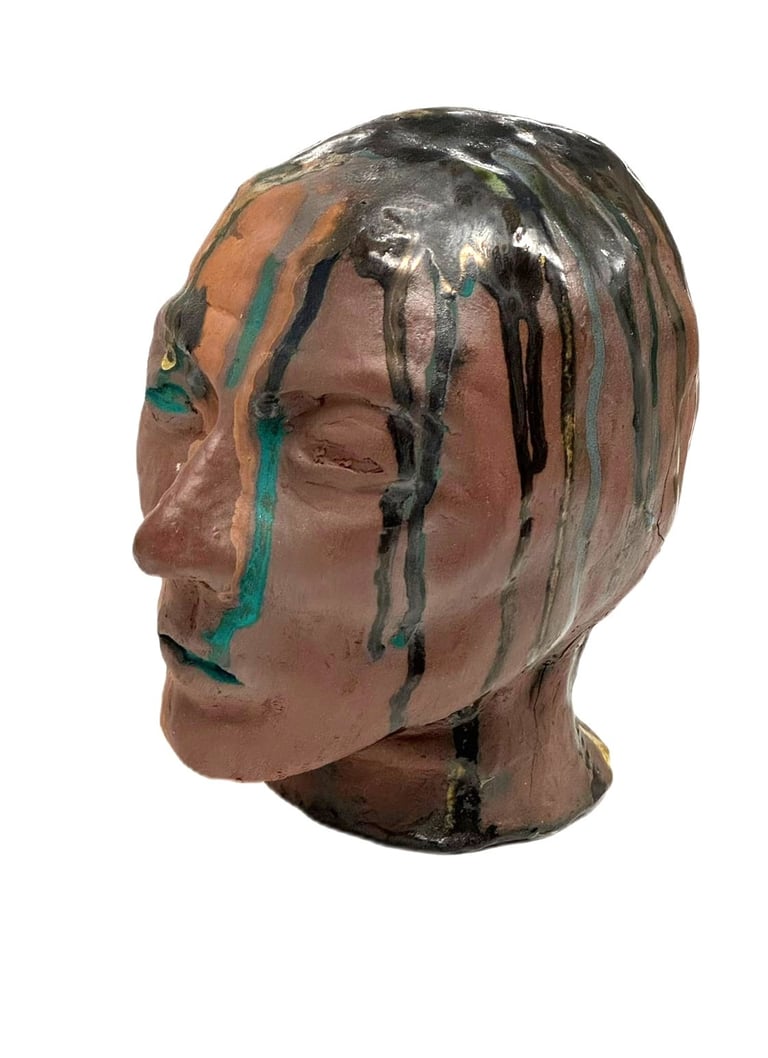
This head sculpture marks a deeply personal exploration of impermanence, vulnerability, and the human form. Made at the beginning of my father’s dementia journey, the work reflects the physical and emotional changes I witnessed — the drawn cheeks contrasted with high cheekbones evoke fragility and loss, while the rounded features convey resilience and presence.
Glaze streams across the head’s surfaces, accentuating both natural form and the unpredictable flow of material. This process mirrors the gradual, uncontrollable changes inherent in life, memory, and the body.
Red clay with green, black, and light brown glaze
2018
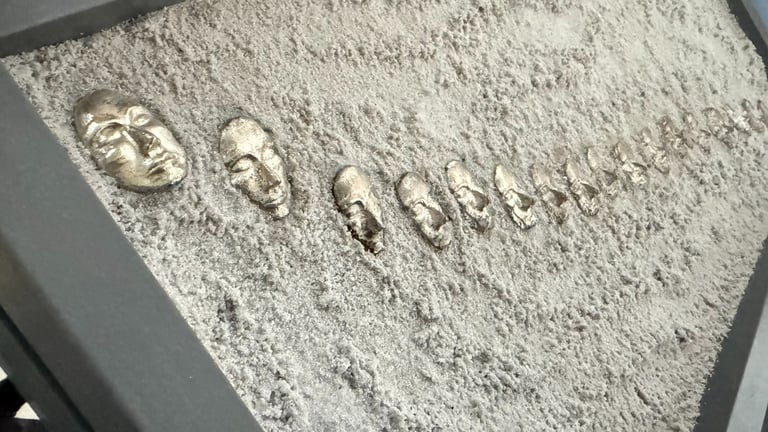
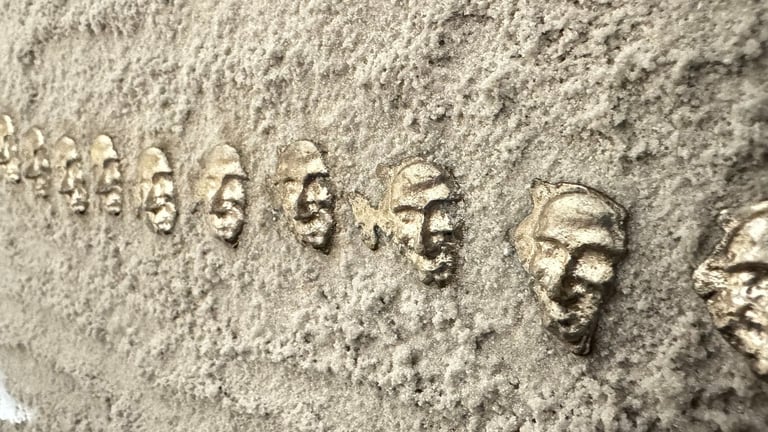
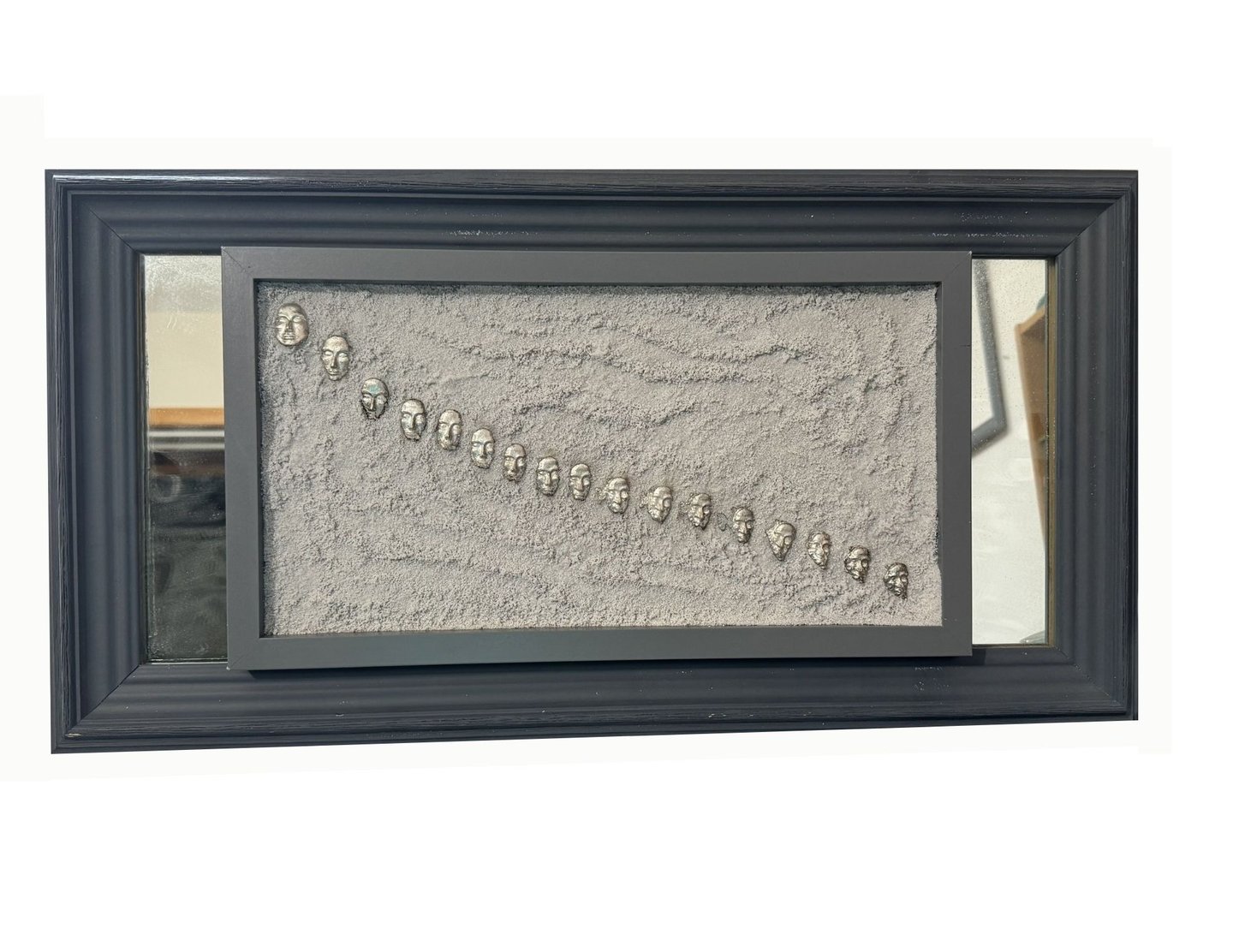
This work brings together three ongoing strands of my practice: ethical material thinking developed through collaborative “haute trash” projects, my investigation into dissolution through repetition, and my fine metalsmithing knowledge.
I sculpted a single face in wax and cast it in silver. That silver cast then became the model for the next casting, and the process was repeated sequentially until seventeen silver faces were produced. Each iteration carries subtle shifts and loss of detail, making visible a progression of transformation through reproduction. Rather than aiming for precision or sameness, the work embraces erosion as an active force. The faces, all bearing neutral expressions, are assembled diagonally across a found gray frame, moving from one corner to the other. Pale gray sand fills the background of the frame, creating the impression that the faces are emerging from — or sinking back into — sediment. This framed work is centered within a larger, secondhand mirror frame, also found and painted gray, reinforcing the use of salvaged materials and ethical reuse.
A restrained, flattened palette of matte gray surfaces contrasts with the polished silver faces and the reflective mirror. While the faces remain emotionally neutral, the mirror implicates the viewer directly, inserting their own reflection into the work. The piece invites contemplation on identity, memory, and authorship, suggesting that repetition does not preserve form but slowly reshapes it — and that the observer is inevitably part of that process.
Silver, wood, mirror
Wall-mounted sculptural installation
2025